
Pterygium (Surfer’s Eye)
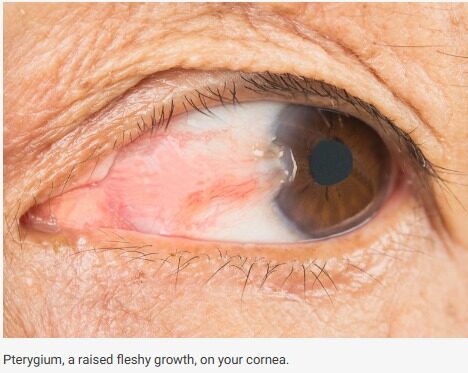
Pterygium, commonly known as Surfer’s Eye, is a raised, fleshy, triangular-shaped growth on the conjunctiva — the clear tissue covering the white part of the eye.
It often develops on the side of the eye closer to the nose and may extend toward the cornea. Long-term exposure to ultraviolet (UV) light is considered one of the main contributing factors. While mild cases may cause little or no discomfort, progressive growth can lead to irritation and visual disturbance.
Why Is Pterygium a Concern?
Symptoms of Pterygium
Some individuals with pterygium may experience no symptoms at all. When symptoms do occur, they may include:
- Pinkish, triangular growth on the cornea
- Eye irritation or discomfort
- Burning or grittiness sensation
- Foreign body sensation
- Redness or swelling
- Blurred vision
- Tearing
- Dry or itchy eyes
Causes & Risk Factors
The exact cause of pterygium is not fully understood. However, it is strongly associated with prolonged exposure to environmental elements, including:
- Wind
- Ultraviolet (UV) light, especially from the sun
- Sand and dust
- Pollen
- Smoke
These factors may contribute to chronic eye irritation and inflammation, increasing the likelihood of pterygium development.
Who Is More Commonly Affected?
Pterygium is more frequently seen in:
- People living in low-altitude regions or near the equator
- Individuals who spend a significant amount of time outdoors in sunny or windy environments
- People with dry eye conditions
- Men aged between 20 and 40 years
Treatment Options
Treatment for pterygium depends on the severity of symptoms and its effect on vision.
Mild cases:
Lubricating eye drops or ointments may be used to relieve dryness, irritation, and inflammation.
Advanced cases:
If pterygium continues to grow or affects vision, surgical removal may be recommended to restore eye comfort and visual clarity.