
Keratoconus
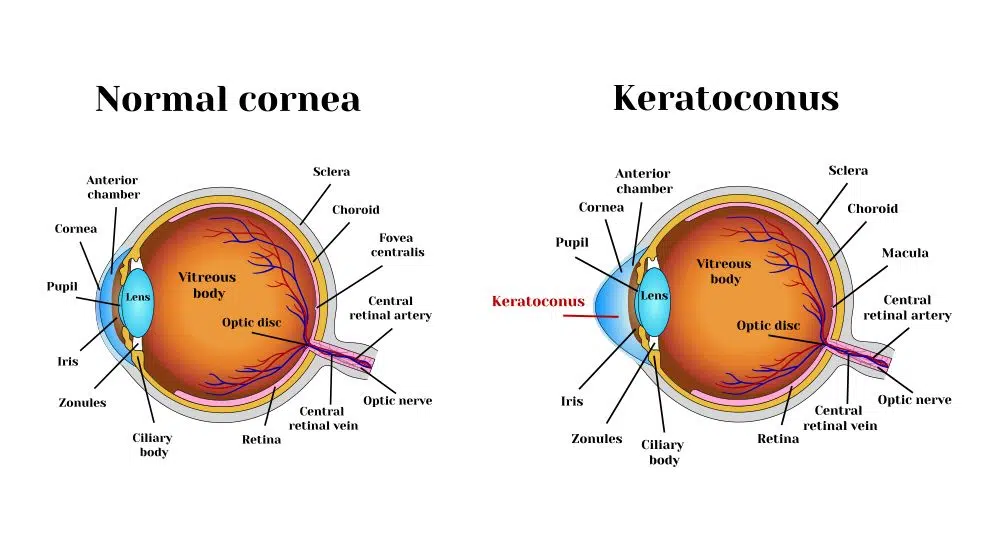
Keratoconus is an eye condition in which the cornea — the clear, dome-shaped front surface of the eye — becomes thinner over time and gradually bulges outward into a cone-like shape.
This abnormal change in corneal shape prevents light from focusing properly on the retina, leading to distorted and reduced vision. Keratoconus usually affects both eyes, although one eye may be more severely affected than the other.
Why Is Keratoconus a Concern?
Symptoms of Keratoconus
Symptoms of keratoconus may vary depending on the stage of the condition and can change as it progresses.
Common symptoms include:
- Blurred or distorted vision
- Increased sensitivity to bright light and glare
- Difficulty with night driving
- Frequent changes in eyeglass or contact lens prescriptions
- Sudden worsening or clouding of vision
Who Is Affected by Keratoconus?
Keratoconus often begins during the late teenage years to early adulthood and may continue to progress gradually for 10 years or longer.
While the condition can occur in anyone, some individuals may be more susceptible due to genetic or environmental factors.
Causes & Risk Factors
The exact cause of keratoconus is not fully understood. However, a combination of genetic and environmental factors is believed to play a role.
Research suggests that:
- Approximately 1 in 10 people with keratoconus has a family member with the condition
- Frequent or vigorous eye rubbing is considered an important contributing factor
Vision Correction & Management Options
Management of keratoconus depends on the severity and progression of the condition.
Early stages:
Vision may be corrected using glasses or soft contact lenses.
Moderate stages:
Rigid gas permeable contact lenses or specialty lenses such as scleral lenses may be required to improve vision.
Advanced stages:
In more severe cases, where vision cannot be adequately corrected, a corneal transplant may be considered.
Corneal Collagen Cross-Linking
Corneal collagen cross-linking is a treatment that may help slow or halt the progression of keratoconus.
This procedure strengthens the corneal tissue and may reduce the risk of further corneal thinning, potentially delaying or preventing the need for future corneal transplantation. Cross-linking may be offered alongside vision correction options, depending on individual suitability.